Our Ingredients
Our Rice
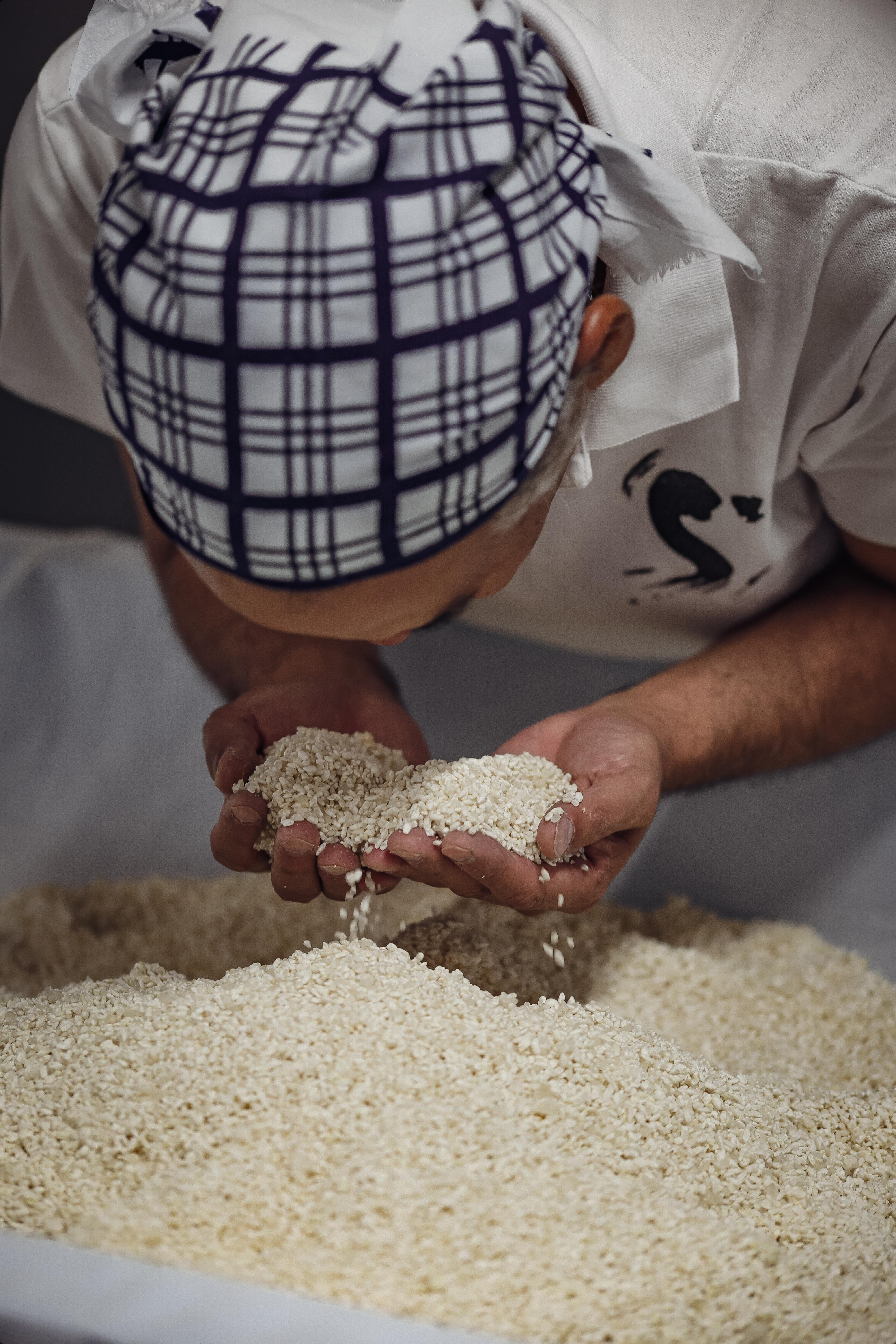
Rice is one of the essential ingredients in sake. Traditionally, Japanese sake brewers used table rice simply because it was readily available. The first known written record of sake dates back to 713 AD, where it was mentioned as part of sacred rituals and celebrations—highlighting its deep cultural and spiritual roots in Japan. By the end of the Edo period (1800s), brewers began using rice varieties specifically cultivated for sake production. One of the most famous, Yamada-Nishiki, was developed in 1936 and has since become a benchmark for premium sake quality. In Europe, however, we don’t currently have access to the same sake-specific rice varieties found in Japan. At SAKÉ DE BORDEAUX, we tested several Japonica rice types grown in the Camargue region—Brio, Selenio, and Manobi. After extensive tasting and experimentation, we selected organic Manobi rice for our still sake, and Selenio for our sparkling sake. We are proud to use Manobi rice from an organic farm that follows the traditional Aigamo method—a natural, sustainable approach where ducks are released into the rice fields to control weeds and pests without the use of chemicals.
Our Water
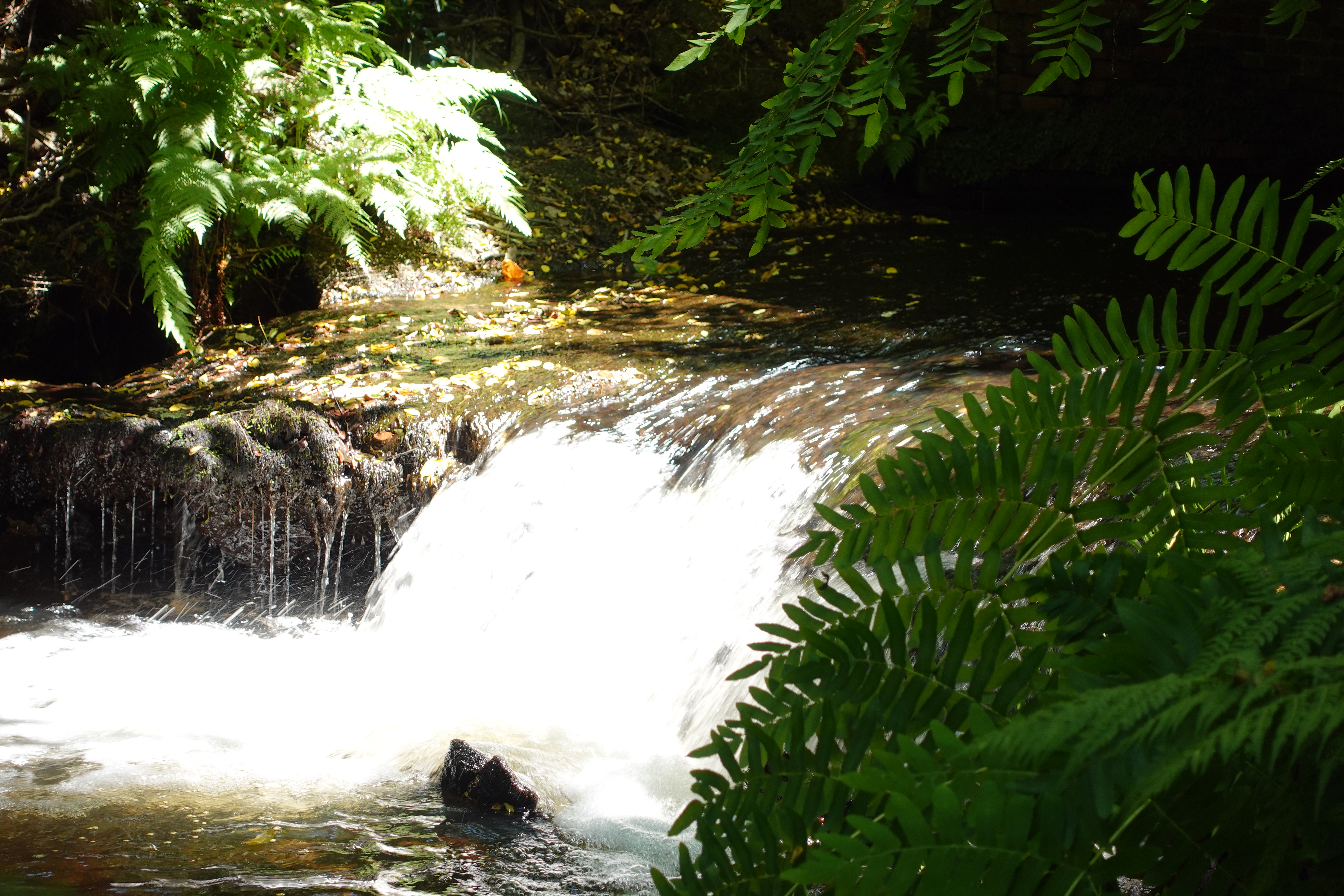
There’s a common perception that French water is extremely hard. However, when it comes to sake brewing, the ideal water is soft to moderately hard. After searching extensively throughout the Gironde region, we found something rare: a natural mineral water source near Arcachon that produces exceptionally soft water. It was a breakthrough for our sake-making ambitions. At our brewery, we now use pure groundwater drawn from 200 meters underground. This water has a mineral profile remarkably similar to Miyamizu — the legendary brewing water used in the Nada region of Japan, known for producing some of the country’s finest sake. With a balanced hardness level and almost no iron content, this water is perfectly suited for brewing clean, refined sake.
Our Yeast
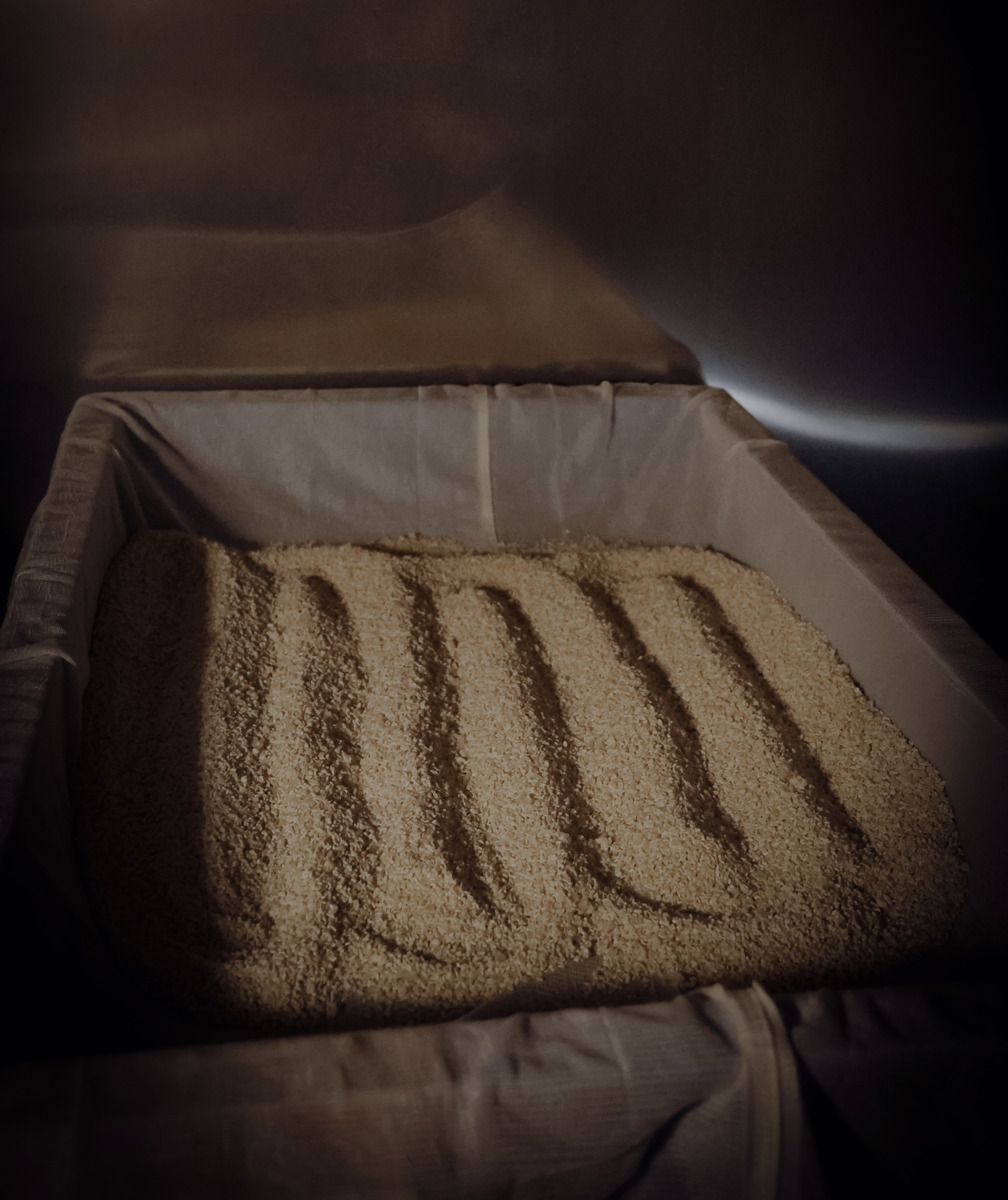
Just as bread yeast differs from wine yeast, sake yeast is distinct from the wine yeasts commonly used in France. Historically, sake was brewed much like natural wine — by allowing wild, airborne yeast to spontaneously ferment the rice. At SAKÉ DE BORDEAUX, however, we took a different path. Inspired by the rich local white wine culture of Bordeaux, we chose to work with wine yeast — carefully selected from regional winemaking practices. This choice brings a distinct character to our sake. Sake brewed with wine yeast is gaining popularity in Japan for its higher acidity and balanced sweetness, resulting in a fresher, more expressive profile. We use three different types of wine yeast, each matched to a specific sake in our collection — carefully crafted to highlight their unique aromas and structure.